
As a doctor at Growing Smiles, I meet patients every single day who walk in holding their jaws and saying, “Doctor, my teeth are in pain, and I couldn’t sleep all night.”
A toothache may seem like a small problem at first, but anyone who has experienced it knows how intense and exhausting it can be. This blog is written from my personal clinical experience to help you understand toothache treatment at home, recognise warning signs, and know when professional care is essential.
Understanding Toothache and Why It Happens
A toothache is pain in or around a tooth caused by irritation of the dental nerve. The pain can be mild, throbbing, sharp, or constant. Many people try to ignore it, hoping it will disappear on its own, but that often makes things worse.
Causes of Pain in Teeth
Some of the most common causes of painful teeth include:
- Dental cavities reaching the nerve
- Gum infections or swelling
- Cracked or broken teeth
- Food stuck between teeth
- Tooth sensitivity due to enamel erosion
- Sinus infections cause referred tooth pain
- Teeth grinding (bruxism)
Identifying the root cause is essential before choosing the right toothache treatment at home.
Toothache Symptoms You Should Not Ignore

Patients often ask me how to know if their toothache is serious. Here are common toothache symptoms:
- Continuous or pulsating pain
- Pain while chewing
- Sensitivity to hot or cold
- Swelling around the gums or face
- Bad breath or pus discharge
- Fever in severe infections
If pain lasts more than 24–48 hours, home care alone may not be enough.
Effective Toothache Home Remedies That Actually Help
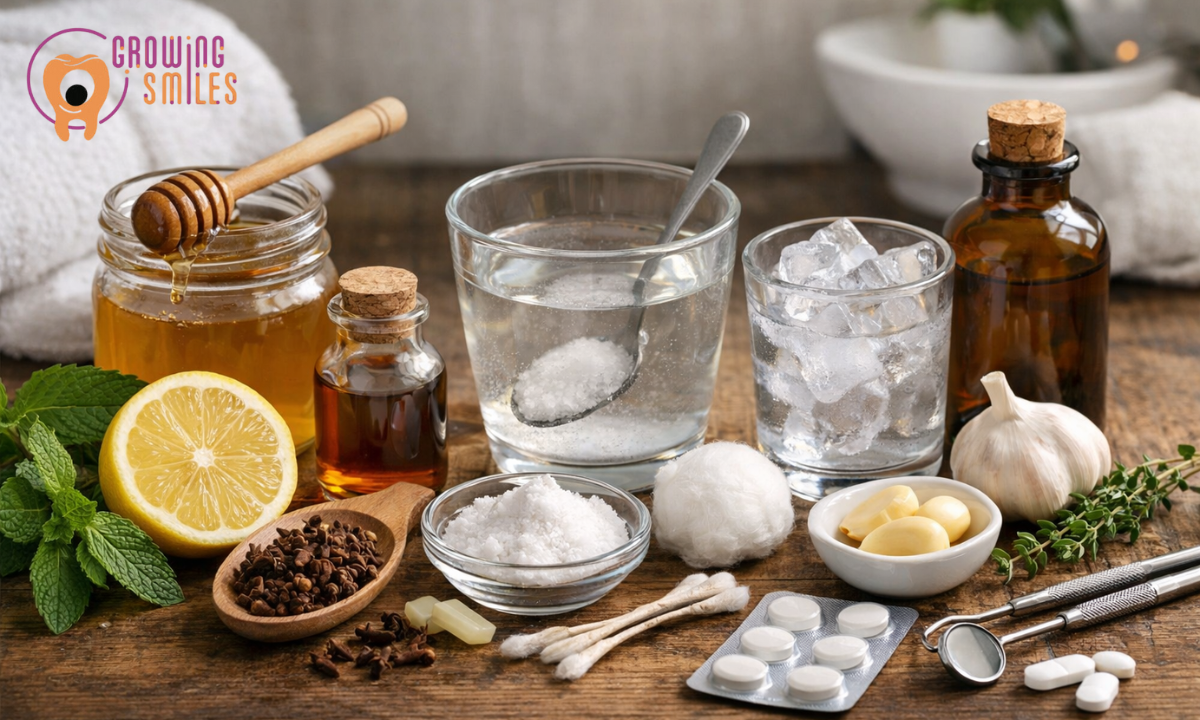
Before you reach for a tablet, there are several toothache home remedies that can provide temporary relief.
Salt Water Rinse
This is the simplest and most effective remedy.
- Mix half a teaspoon of salt in warm water
- Rinse for 30 seconds
It reduces inflammation and cleans infection-causing bacteria.
Cold Compress
Applying ice to the outside of the cheek helps:
- Reduce swelling
- Numb pain
This is especially useful if the pain is due to trauma.
Clove Oil
Clove oil is a traditional toothache pain reliever.
- Apply a small amount using cotton
- It contains eugenol, a natural anesthetic
Garlic Paste
- Garlic has antibacterial properties.
- Crush a clove and apply it directly to the tooth
This is a commonly trusted toothache cure at home.
These toothache remedies at home help manage pain, but do not cure underlying dental problems.
Toothache Treatment at Home: What Works and What Doesn’t

Many patients rely heavily on toothache treatment at home, which is fine for short-term relief. However:
- Home remedies help relieve a toothache
- They do not fix cavities or infections
- Delaying treatment can lead to root canal or tooth loss
Home care should always be followed by a dental check-up.
Medicines for Toothache: When You Need Extra Relief
Sometimes pain is too intense for home remedies alone.
Toothache Painkiller Tablet
Over-the-counter options include:
- Paracetamol
- Ibuprofen (if medically safe for you)
These medicines for toothache reduce pain and inflammation, but should not be taken long-term without medical advice.
Caution: Never place aspirin directly on the tooth or gums; this can cause burns.
How to Get Pain Relief From Tooth Pain Safely

Here’s my professional advice:
- Use painkillers only as directed
- Avoid extremely hot or cold foods
- Chew on the opposite side
- Maintain oral hygiene gently
These steps act as a reliable toothache pain reliever until you see a dentist.
When Toothache Is a Dental Emergency
Seek immediate care if you experience:
- Severe swelling
- Difficulty opening your mouth
- Fever with tooth pain
- Pain spreading to the ear or jaw
Ignoring these signs can lead to serious complications.
Final Thoughts
As a doctor at Growing Smiles, I genuinely understand how distressing tooth pain can be. While toothache treatment at home can help manage discomfort temporarily, it should never replace professional diagnosis and care. Persistent pain is your body’s way of telling you something is wrong.
If you are searching for a reliable Dental clinic in Whitefield, timely consultation can save your tooth and prevent unnecessary suffering. Early care always means simpler treatment, less pain, and better long-term oral health.
Your smile deserves attention; don’t wait until the pain becomes unbearable.
FAQs
1. What is the best toothache treatment at home?
Saltwater rinses, clove oil, and cold compresses are effective for temporary relief. However, they do not treat the root cause.
2. Which toothache painkiller tablet is safest?
Paracetamol is generally safe. Ibuprofen can be used if you have no stomach or kidney issues. Always consult a doctor if unsure.
3. Why are my teeth aching at night more?
Blood flow increases when lying down, which can intensify nerve pain caused by infection or cavities.
4. Can a toothache be cured at home permanently?
No. Home remedies only provide temporary relief. Permanent cure requires dental treatment.
5. What are the most common symptoms of teeth infection?
Throbbing pain, swelling, pus discharge, fever, and foul taste in the mouth indicate infection.
6. When should I visit a dentist instead of using home remedies?
If pain lasts more than two days, worsens, or is accompanied by swelling or fever, visit a dentist immediately.