
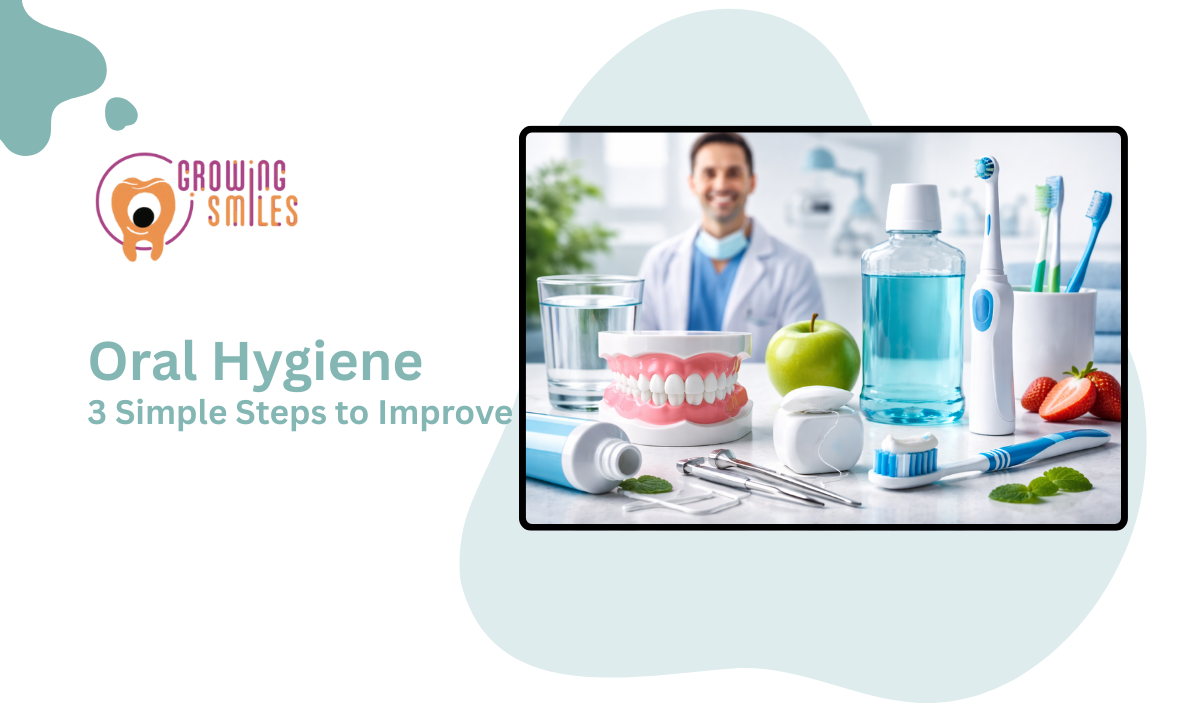
As a doctor at Growing Smiles, I meet patients every day who believe oral problems begin suddenly. In reality, most dental issues develop quietly over time due to gaps in daily care. That is why understanding the steps of oral hygiene is not just important; it is essential for lifelong health, confidence, and comfort.
In this blog, I want to speak to you not just as a dentist, but as someone who genuinely cares about your smile and overall well-being. Let us walk through the science, the habits, and the mindset behind effective oral care, and then focus on three simple yet powerful steps that can truly transform your oral health.
What Is Oral Care and Why Does It Matter

Before we explore the steps of oral hygiene, it is important to understand what oral care is. Oral care refers to the daily practices that keep your teeth, gums, tongue, and mouth clean and healthy. It goes beyond brushing; it includes flossing, rinsing, dietary awareness, and regular dental checkups.
Many people ask me, “Doctor, what does oral hygiene really mean?” In simple terms, what is Oral Hygiene means the prevention of dental problems such as cavities, gum disease, bad breath, and tooth loss through consistent care.
Good oral hygiene not only protects your teeth. It reduces the risk of infections, supports digestion, improves speech, and even plays a role in heart health and diabetes management.
Purpose Of Oral Hygiene: More Than Just a Clean Smile
The Purpose Of Oral Hygiene is often misunderstood. Patients think it is only about white teeth, but its real purpose is disease prevention and long-term oral stability.
From my clinical experience, proper oral hygiene helps to:
- Prevent tooth decay and gum disease
- Maintain strong enamel and healthy gums
- Reduce oral bacteria that can affect overall health
- Avoid painful and costly dental treatments
- Boost self-confidence through fresh breath and a healthy smile
When oral hygiene is neglected, plaque hardens into tartar, gums become inflamed, and silent damage begins. This is why following the correct oral hygiene procedure daily is non-negotiable.
The Oral Hygiene Procedure: Building the Right Foundation
A proper Oral Hygiene Procedure is not complicated, but it must be consistent and correct. Many patients brush daily but still suffer from dental issues because they miss key steps or rush through them.
From a dentist’s perspective, oral hygiene should be:
- Gentle, not aggressive
- Thorough, not rushed
- Daily, not occasional
Now, let us move into the heart of this blog, the three most important steps of oral hygiene that I personally recommend to every patient at Growing Smiles.
Step 1: Correct Brushing

The first and most crucial step is brushing your teeth properly.
Brushing should be done twice a day for at least two minutes using a soft-bristle toothbrush and fluoride toothpaste. Focus on gentle circular motions rather than harsh scrubbing. Pay special attention to the gum line, where plaque tends to hide.
As a doctor, I often see enamel damage caused by aggressive brushing. Remember, cleaning is about technique, not force.
Key brushing tips:
- Replace your toothbrush every 3 months
- Brush your tongue to reduce bacteria and bad breath
- Do not rinse aggressively immediately after brushing
This single step, when done correctly, dramatically reduces cavities and gum disease.
Step 2: Flossing and Interdental Cleaning – Where Brushes Cannot Reach
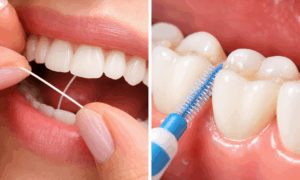
The second step is flossing. This is the most commonly skipped step, yet it is critical.
Your toothbrush only cleans about 60% of your tooth surfaces. The remaining areas, between the teeth, are where decay and gum disease often begin.
Flossing once a day:
- Removes trapped food particles
- Prevents gum inflammation
- Reduces bleeding gums
- Lowers the risk of bad breath
If traditional floss feels difficult, interdental brushes or water flossers are excellent alternatives. The goal is consistency, not perfection.
From my experience, patients who floss regularly see a visible improvement in gum health within just a few weeks.
Step 3: Rinsing, Diet, and Daily Awareness

The final step focuses on protection and prevention throughout the day.
Using an alcohol-free mouthwash helps:
- Reduce bacteria
- Strengthen enamel
- Maintain fresh breath
Equally important is diet awareness. Sugary snacks, acidic drinks, and frequent snacking increase acid attacks on your teeth. Drinking water after meals and limiting sugar intake go a long way in protecting your smile.
This step is about mindfulness, being aware of how daily habits impact your oral hygiene.
Final Thoughts
At Growing Smiles, I always tell my patients that oral health is a daily commitment, not an occasional effort. Following the correct steps of oral hygiene can save you from pain, expense, and stress in the future.
If you are ever unsure about your routine, professional guidance makes a world of difference. Visiting a trusted dental clinic in Whitefield, Bangalore, ensures early detection, personalized advice, and preventive care tailored to your needs.
Your smile is an investment. Treat it with care, consistency, and compassion, and it will reward you for life.
FAQs
1. How often should I follow the steps of oral hygiene?
You should follow the steps of oral hygiene daily. Brushing twice a day and flossing once a day is the minimum standard for good oral health.
2. Is brushing alone enough for good oral hygiene?
No. Brushing alone does not clean between the teeth. Flossing and rinsing are essential parts of a complete oral hygiene procedure.
3. At what age should children start oral hygiene routines?
Oral hygiene should begin as soon as the first tooth erupts. Parents should guide children until they can brush properly on their own.
4. Can poor oral hygiene affect overall health?
Yes. Poor oral hygiene has been linked to heart disease, diabetes complications, and respiratory infections.
5. How often should I visit a dentist even if I have no pain?
A dental checkup every six months is ideal, even if you feel no discomfort. Prevention is always better than treatment.
6. Why choose Growing Smiles for oral care guidance?
At Growing Smiles, we focus on personalized, preventive, and patient-first dental care, ensuring every smile grows healthier with time.